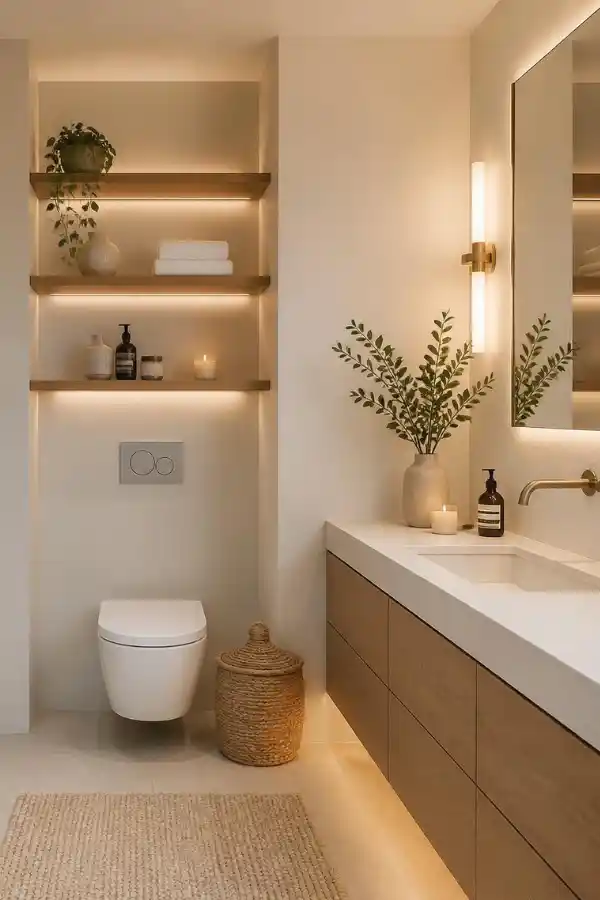
A minimalist small bathroom design with warm wood and spa-inspired style focuses on creating a calm, functional, and visually open space using simplicity, natural materials, and soft sensory elements. This design approach is especially effective in small bathrooms where clutter control, smart layout planning, and material balance are essential. By combining minimalism with spa-like comfort and the warmth of wood, even the smallest bathroom can feel like a relaxing retreat.
Understanding Minimalist Spa-Inspired Bathroom Design
Minimalist bathroom design is centered on reducing visual clutter and keeping only essential elements. Every feature must serve a purpose, whether functional or aesthetic. This creates a clean, organized environment that feels spacious even in small layouts.
Spa-inspired design adds emotional comfort to minimalism. Instead of focusing only on appearance, it prioritizes relaxation and sensory experience. Soft lighting, natural textures, and calming colors help create a peaceful atmosphere similar to a wellness spa.
Warm wood plays a balancing role by adding natural warmth. Minimalist bathrooms can sometimes feel cold due to heavy use of tile, glass, and white surfaces. Wood introduces texture and softness, making the space feel more inviting and balanced.

Planning a Small Bathroom Layout for Maximum Space
In small bathroom design, layout efficiency is critical because every inch matters. A well-planned layout ensures smooth movement and prevents the space from feeling cramped.
Floating vanities and wall-mounted toilets help free up floor space, making the room feel larger and more open. Glass shower enclosures also improve visual flow by removing heavy barriers that block light.
Corner showers are highly effective in compact bathrooms because they utilize unused space efficiently. In narrow bathrooms, placing fixtures along a single wall helps reduce visual clutter and simplifies the overall design.
Maintaining visual flow is important. When the eye can move freely across the room without interruption, the bathroom feels more spacious and organized.

Smart Storage Solutions for Minimalist Bathrooms
Storage in a minimalist bathroom must be functional but invisible. The goal is to keep essentials accessible without creating clutter.
Built-in wall niches inside showers provide practical storage without adding bulk. Recessed cabinets are another smart solution that keeps surfaces flat and clean.
Floating wooden shelves add warmth while maintaining openness. Vanity units with hidden compartments help keep countertops clear, which is essential for achieving a minimalist look.
Mirrored cabinets combine storage and reflection, improving both functionality and spatial perception.
Incorporating Warm Wood into Bathroom Design
Warm wood is the defining feature that transforms a minimalist bathroom into a spa-like environment. It adds texture, warmth, and a natural organic feel that balances modern materials.
Light woods such as ash, birch, and oak create a bright and airy Scandinavian-inspired aesthetic. Medium tones offer balance and versatility, while darker woods like walnut create a richer, more luxurious spa atmosphere.
Teak is one of the most practical options for bathrooms because of its natural moisture resistance. It performs well in humid environments when properly sealed.
Wood should be used strategically rather than excessively. Floating vanities, shelving, mirror frames, and accent panels are ideal applications that enhance warmth without overwhelming the space.

Creating a Spa-Like Atmosphere Through Lighting
Lighting is one of the most important elements in spa-inspired bathroom design because it directly influences mood and perception.
Layered lighting works best. Instead of relying on a single overhead light, multiple light sources should be used to create depth and softness. Ambient lighting provides overall illumination, task lighting supports daily routines, and accent lighting highlights materials like wood or stone.
Warm white lighting is preferred because it enhances natural textures and creates a calming effect. Cool lighting can feel harsh and reduce the spa-like atmosphere.
Dimmer switches allow flexibility, enabling users to adjust brightness depending on mood or time of day. Natural light should also be maximized whenever possible.

Choosing a Minimalist Color Palette
A spa-inspired minimalist bathroom relies heavily on neutral and earthy colors to create a calm environment.
Soft white, warm beige, light grey, and sand tones form the foundation of the design. These shades reflect light and make small bathrooms feel more open.
Muted accents such as soft green or stone blue can be used sparingly to enhance the natural feel without disrupting minimalism.
Consistency in color selection is important because too many contrasting tones can make a small bathroom feel visually cluttered.

Materials and Textures That Enhance Depth
A successful minimalist bathroom combines different materials to avoid flatness while maintaining simplicity.
Stone materials like marble, travertine, or matte porcelain add subtle luxury without overwhelming the space. Matte finishes are preferred because they feel softer and more natural.
Glass is essential for maintaining openness in small bathrooms. Frameless shower enclosures allow uninterrupted sightlines, making the space feel larger.
The combination of smooth surfaces like glass with natural textures like wood creates balanced contrast and visual interest.

Accessories and Styling for a Minimalist Spa Bathroom
Accessories should be minimal, functional, and carefully selected.
Small indoor plants such as ferns or snake plants add freshness and improve air quality while maintaining simplicity. Wooden trays, stone soap dispensers, and woven baskets provide subtle texture without clutter.
Towels in neutral tones enhance the cohesive spa-like aesthetic. Neatly folding or rolling them adds to the sense of order.
Overdecorating should be avoided because it breaks the calm, minimal atmosphere.

Common Mistakes to Avoid in Small Spa Bathroom Design
One common mistake is overcrowding the space with too many materials or decorative elements. Minimalism requires restraint and intentional choices.
Another mistake is poor lighting design. Without layered lighting, even a well-designed bathroom can feel dull and uninviting.

Using overly dark colors in small bathrooms can make the space feel smaller unless balanced properly with light tones and good lighting.
Ignoring ventilation is also a serious issue, especially when using wood, because moisture buildup can cause long-term damage.
FAQs
What makes a minimalist spa-inspired bathroom different from a regular bathroom?
A minimalist spa-inspired bathroom focuses on simplicity, calmness, and sensory comfort. It removes clutter and uses natural materials, soft lighting, and neutral colors to create a relaxing spa-like environment.
Is wood safe for small bathroom designs?
Yes, wood is safe when properly sealed and moisture-resistant types like teak or treated oak are used. Good ventilation is also important for durability.
How can I make a small bathroom look bigger?
Use floating fixtures, glass shower panels, light colors, mirrors, and minimal clutter. These elements create visual openness and improve spatial perception.
What colors are best for spa-style bathrooms?
Neutral tones such as white, beige, soft grey, and warm earthy shades work best. They create a calm environment and pair well with wood accents.
Can I achieve a spa bathroom on a budget?
Yes, by focusing on lighting, paint, and small upgrades like shelves, accessories, and textiles. Even simple changes can create a spa-like effect.
What type of lighting works best in spa-inspired bathrooms?
Warm, layered lighting with dimmable options works best. It creates a soothing atmosphere while maintaining functionality for daily use.
Final Thoughts
A minimalist small bathroom design with warm wood and spa-inspired style is a timeless approach that transforms compact spaces into calming retreats. By combining simplicity, natural materials, and thoughtful lighting, the bathroom becomes more than just a functional area—it becomes a place of relaxation and balance. Careful design choices ensure that even the smallest bathroom feels open, warm, and emotionally restorative.